The Opening
7 verses
الفاتحة
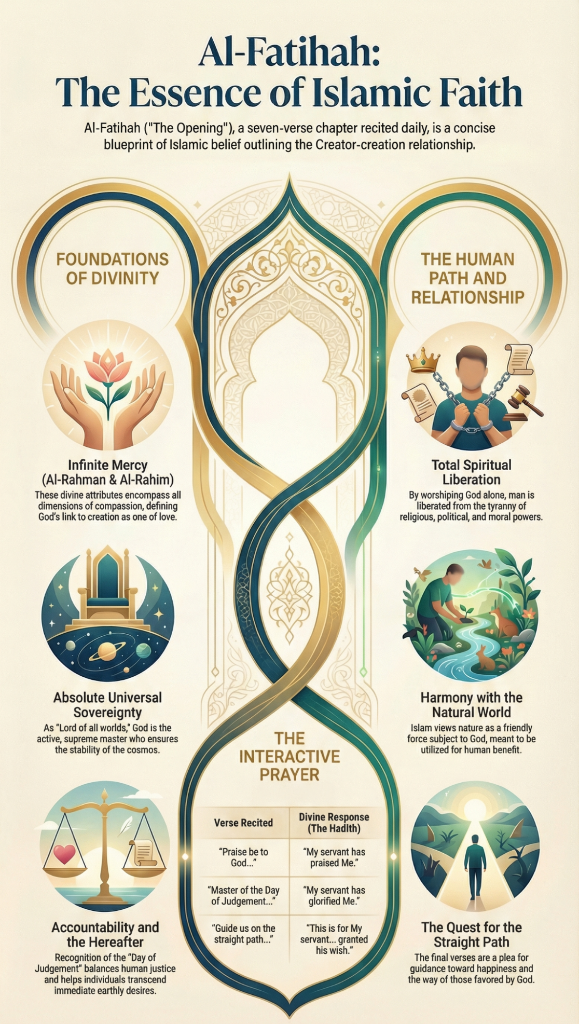
Surah Al-Fatihah is the first chapter of the Qur'an and is considered the "Opening" of the holy book. Although it is short—consisting of only seven verses—it contains the core ideas and essential beliefs of Allah (God)'s message to humanity. Every Muslim recites this surah at least seventeen times a day during their five obligatory prayers, as the Prophet Muhammad taught that a prayer is not valid without it.
The Cow
286 verses
البقرة
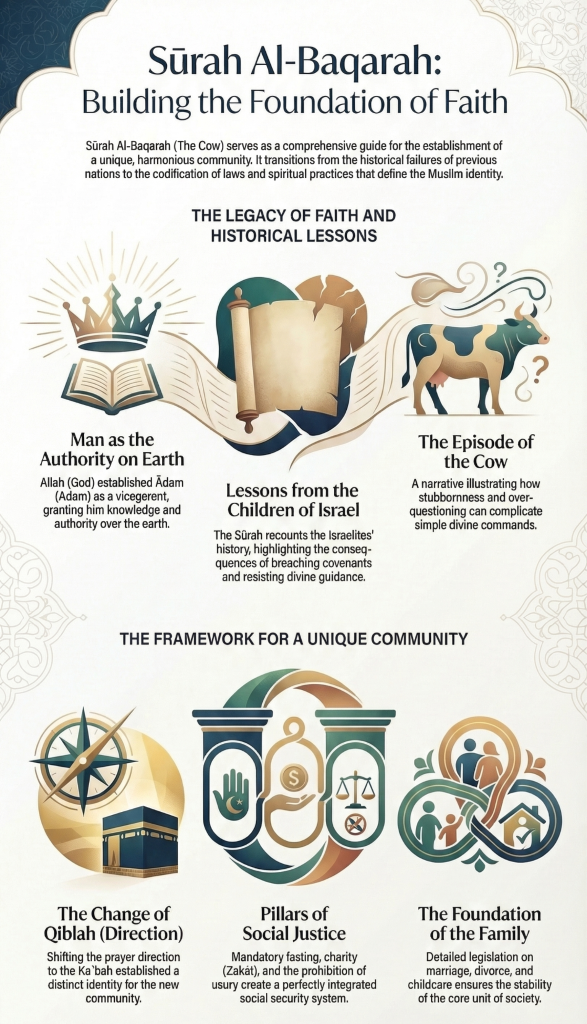
Surah Al-Baqarah is the longest surah in the Qur'an and was revealed in Madinah to establish the foundational rules and identity of the Muslim community (Ummah). It serves as a comprehensive constitution and a manual for living, covering everything from personal faith to social laws. The surah highlights three types of people: the sincere believers who possess taqwa (Allah-consciousness), the unbelievers who reject the truth, and the hypocrites who claim faith but cause corruption.
The House of Imran
200 verses
آل عمران
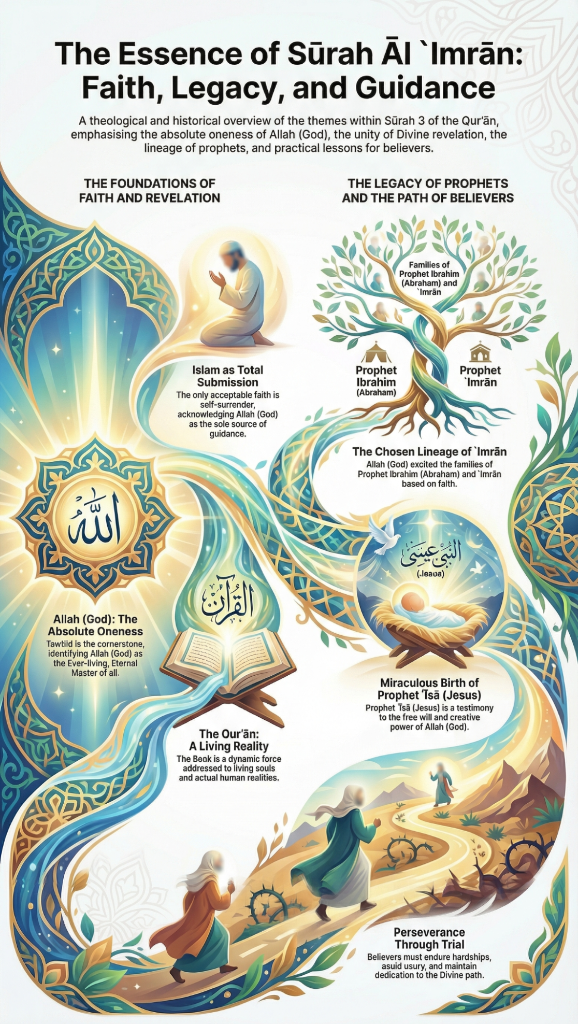
Surah Al 'Imran is a Madinian surah that deals with a very active period in early Islamic history, specifically the time between the Battle of Badr and the Battle of Uhud. The surah serves as a guide for the Muslim community, clarifying their unique identity and their relationship with Allah (God). It begins by establishing the absolute Oneness of Allah (God) and the truth of the Qur'an as a "Criterion" that confirms earlier scriptures like the Torah and the Gospel.
The Women
176 verses
النساء
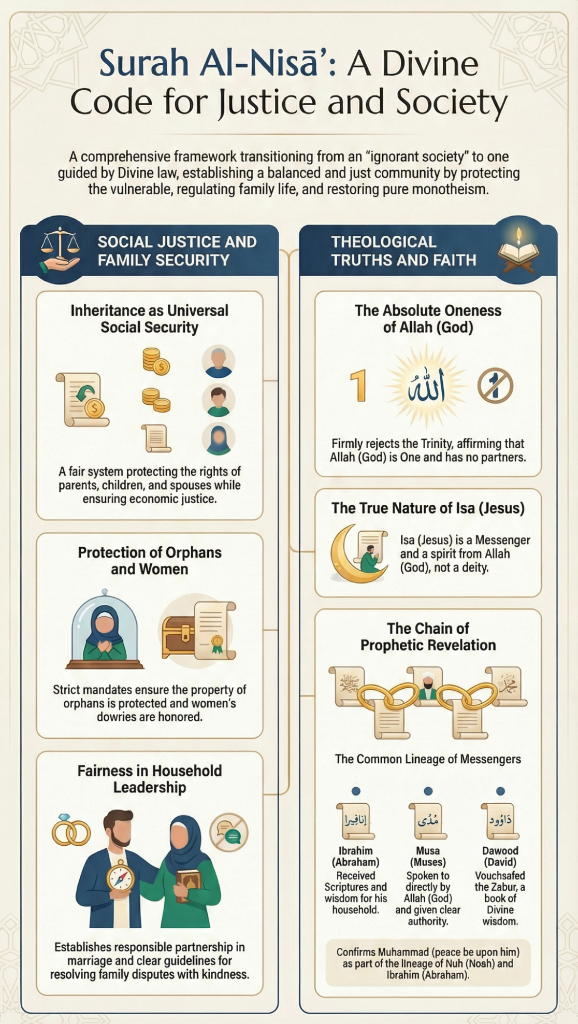
Surah Al-Nisa' is the second longest surah in the Qur'an and was revealed in Madinah to outline the code of living for the newly born Muslim community. It faces the practical circumstances of the early believers, establishing foundations for family, social morality, and external relations. A central focus is the protection of the weak and vulnerable, particularly orphans and women, who were often wronged in pre-Islamic times.
The Repast
120 verses
المائدة
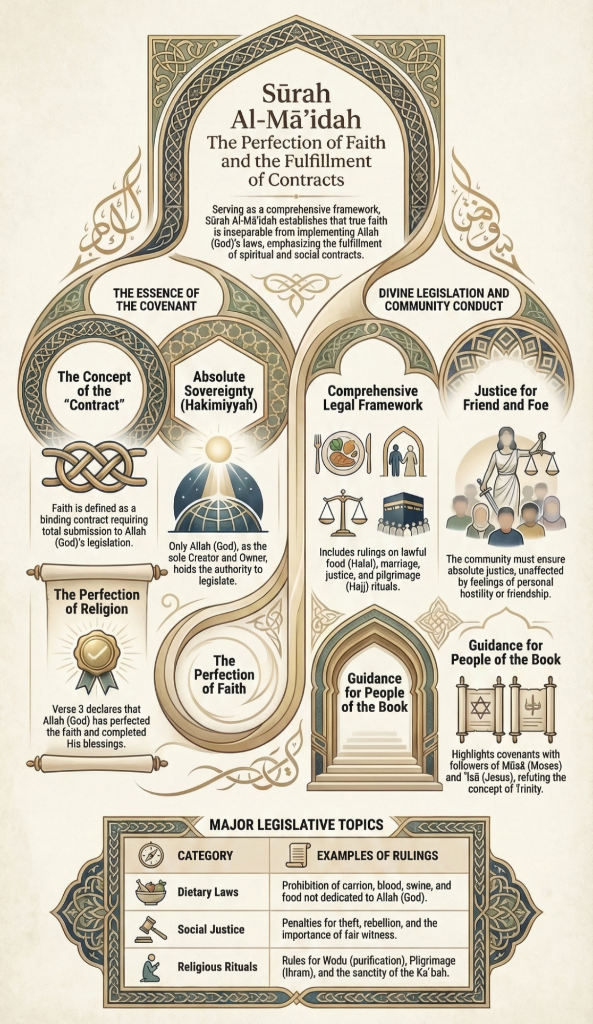
Surah Al-Ma'idah was revealed in Madinah and serves as the final governing text of the Islamic constitution. It was sent down to establish a community, organize a society, and set moral values based on the authority of Allah (God) alone. A central theme is the "perfection of religion," as it contains the verse: "This day I have perfected your religion for you... and have chosen Islam as a religion for you."
The Cattle
165 verses
الأنعام
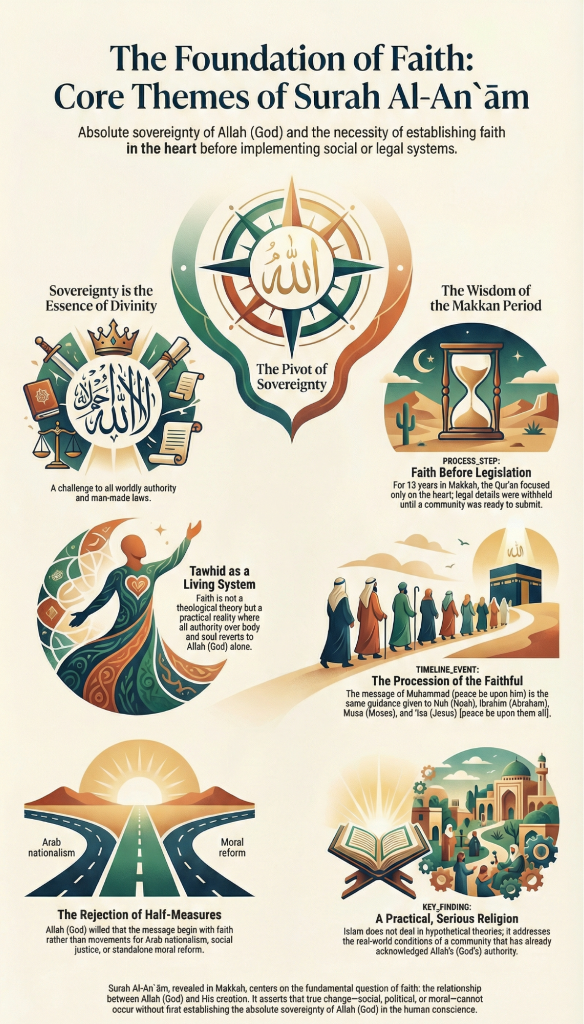
Surah Al-An'am is a Makkan surah that focuses on the fundamental question of faith: the relationship between Allah (God), the Creator, and His servants. Revealed during a period of intense opposition in Makkah, it does not focus on detailed community laws but rather on establishing the Oneness of Allah (God) (Tawheed) in the human heart. The surah uses the "open book of the universe"—such as the breaking of dawn, the cycles of the sun and moon, and the growth of seeds—to prove that Allah (God) is the only true Sovereign and Lawgiver.
The Heights
206 verses
الأعراف
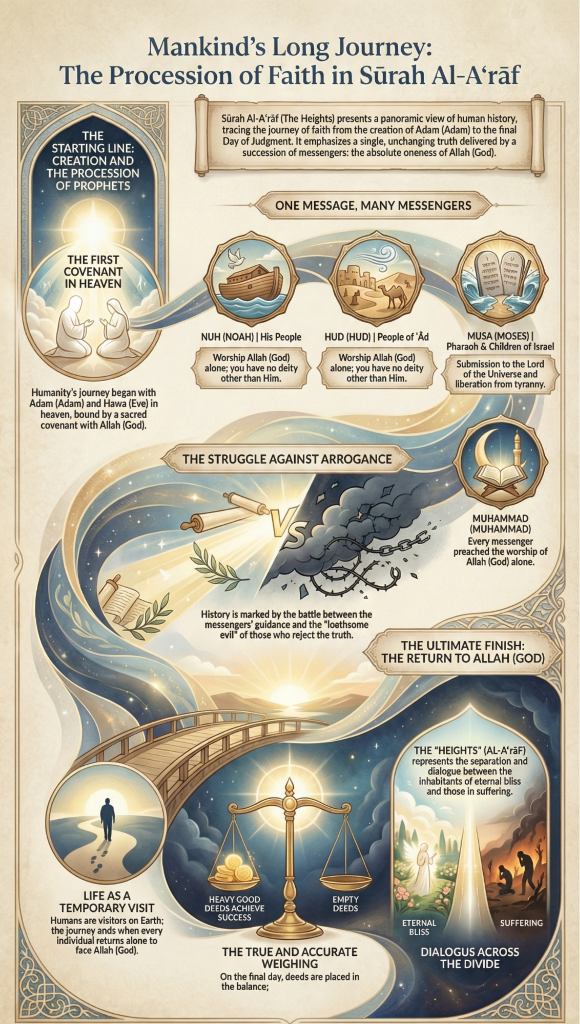
Surah Al-A'raf is a Makkan revelation that centers on the fundamental theme of faith and its journey throughout human history. It provides a panoramic view of mankind's long journey, starting from the creation of Adam (Adam) in heaven to the ultimate return of all souls to Allah (God) for judgment. The surah is presented as a battle between truth and ignorance (jahiliyyah), showing how different communities throughout time responded to the message of Allah (God).
The Spoils of War
75 verses
الأنفال
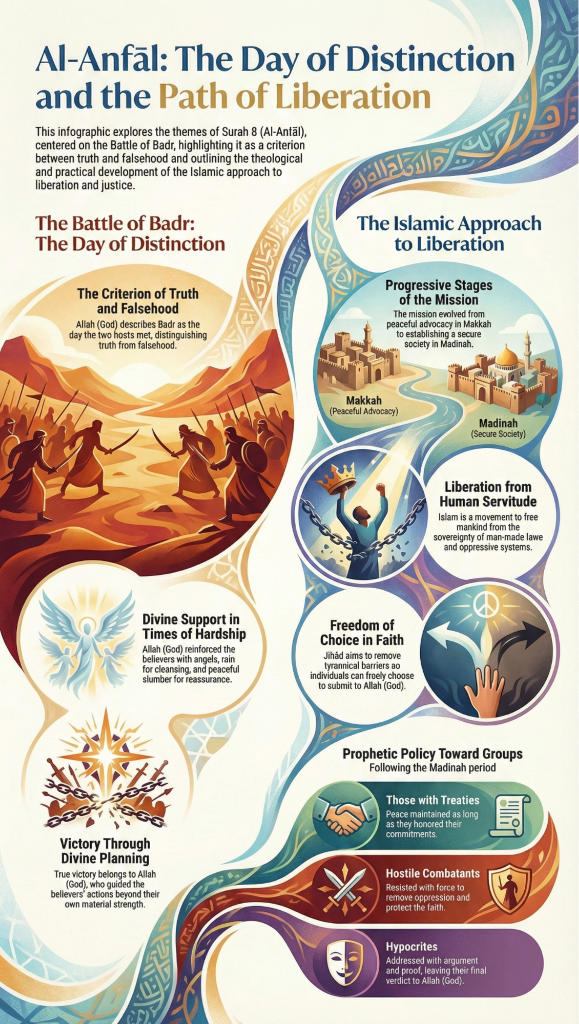
Surah Al-Anfal is a Madinan surah revealed shortly after the Battle of Badr, which was a major turning point in human history. Allah (God) describes this battle as the "Day of Distinction" because it clearly separated truth from falsehood. The surah provides a deep commentary on the events of the battle, reminding the believers that their victory was not due to their own strength or numbers but was granted through the planning, support, and direct intervention of Allah (God).
The Repentance
129 verses
التوبة
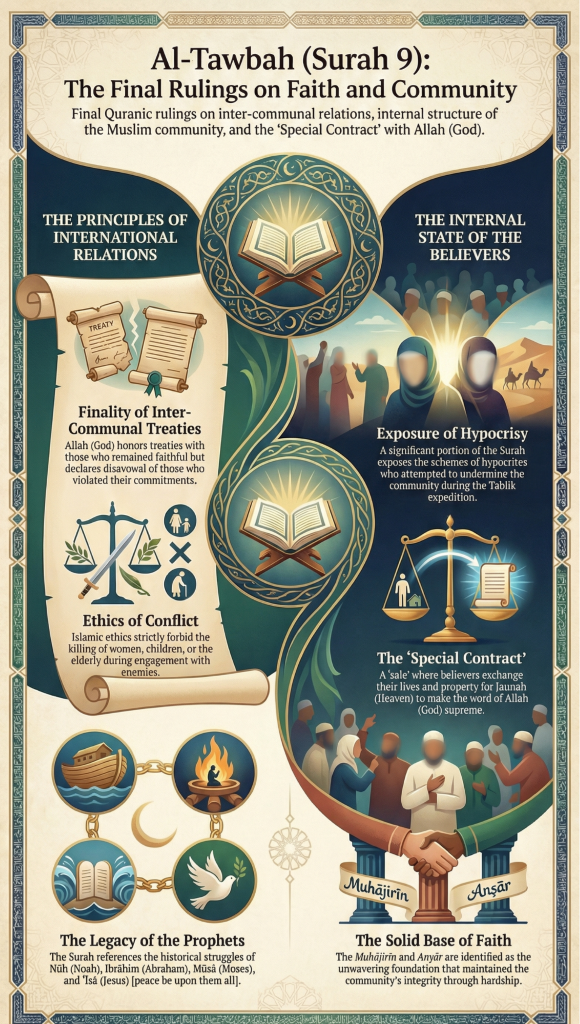
Surah Al-Tawbah is one of the final revelations of the Qur'an, revealed in Madinah during the ninth year of the Hijrah. It is unique because it is the only surah that does not begin with the "Bismillah". This chapter serves as a final declaration regarding the relations between the Muslim community and other groups, including idolaters and the People of the Book. It provides a detailed classification of society, distinguishing between the sincere vanguard of the Muhajirun (Emigrants) and Ansar (Helpers), the desert Arabs, and the Munafiqun (hypocrites) who sought to undermine Islam from within.
Jonah
109 verses
يونس
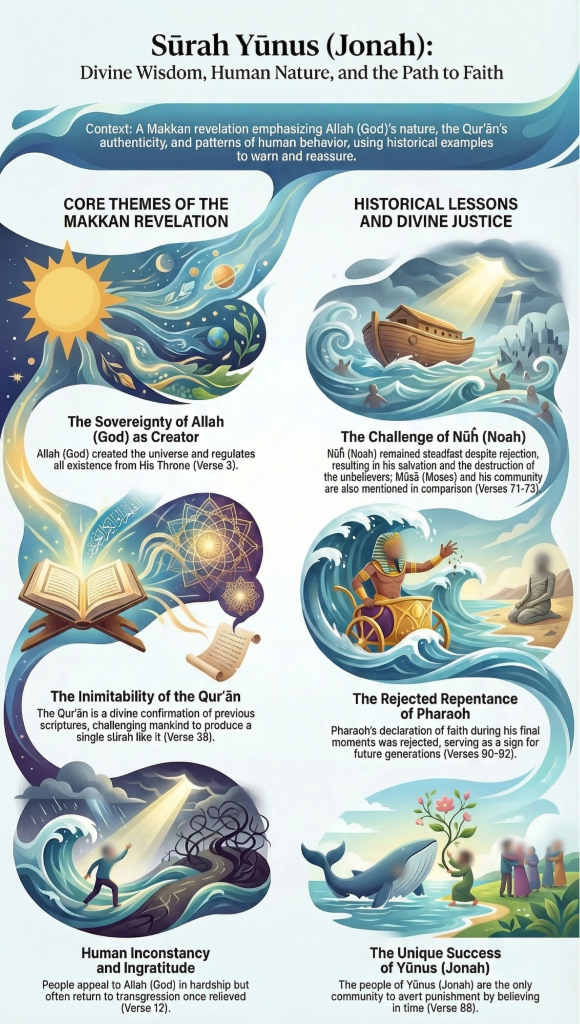
Surah Yunus is a Makkan revelation that centers on the nature of Allah (God), the meaning of servitude, and the essential relationship between the Creator and humanity. Revealed during a time of heated debate between the Prophet Muhammad and the unbelievers in Makkah, the surah defends the truth of revelation and the Qur'an against accusations of "sorcery" or "fabrication". It makes clear that the Qur'an is a book of wisdom that could not have been devised by anyone other than Allah (God).
Hud (Prophet's name)
123 verses
هود
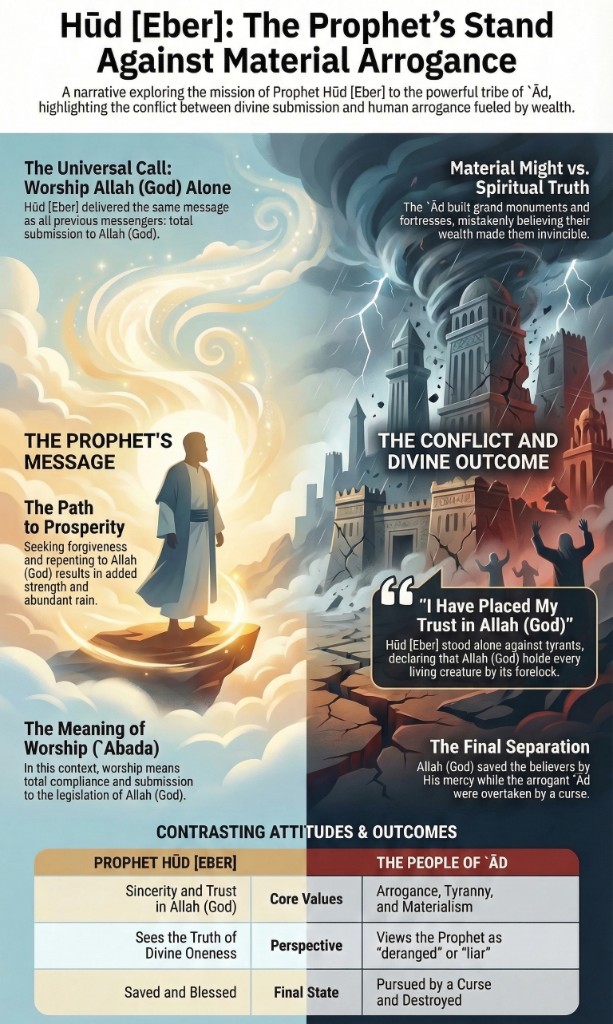
Surah Hūd is a Makkan revelation sent down during the "Year of Sorrow," a very difficult time for the Prophet Muhammad following the deaths of his wife Khadijah and his uncle Abu Talib. The surah serves as a powerful comfort, reassuring the believers that they are part of a long "continuous procession" of faith that has existed since the beginning of human history. It provides detailed accounts of noble messengers like Nuh [Noah], Hūd, Şāliĥ, Ibrahim [Abraham], Lut [Lot], Shu'ayb, and Musa [Moses].
Joseph
111 verses
يوسف
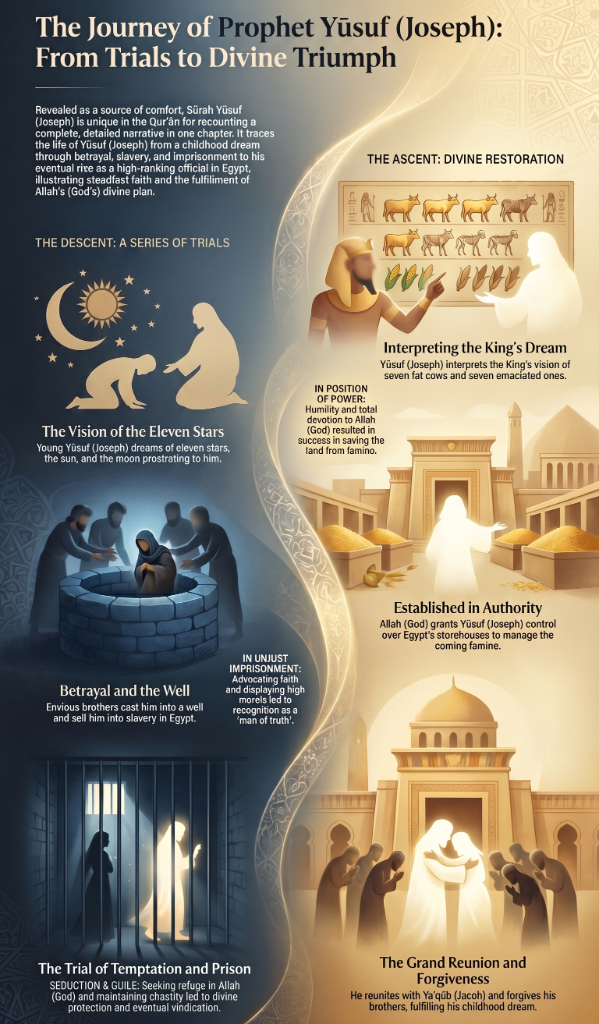
Surah Yūsuf is a Makkan revelation revealed during a critical time known as the "Year of Sorrow," when the Prophet Muhammad felt lonely and alienated after losing his primary supporters. Unlike other stories in the Qur'ān that are split across different surahs, the story of Yūsuf [Joseph] is unique because it is related in full, with complete details, in one single unit.
The Thunder
43 verses
الرعد
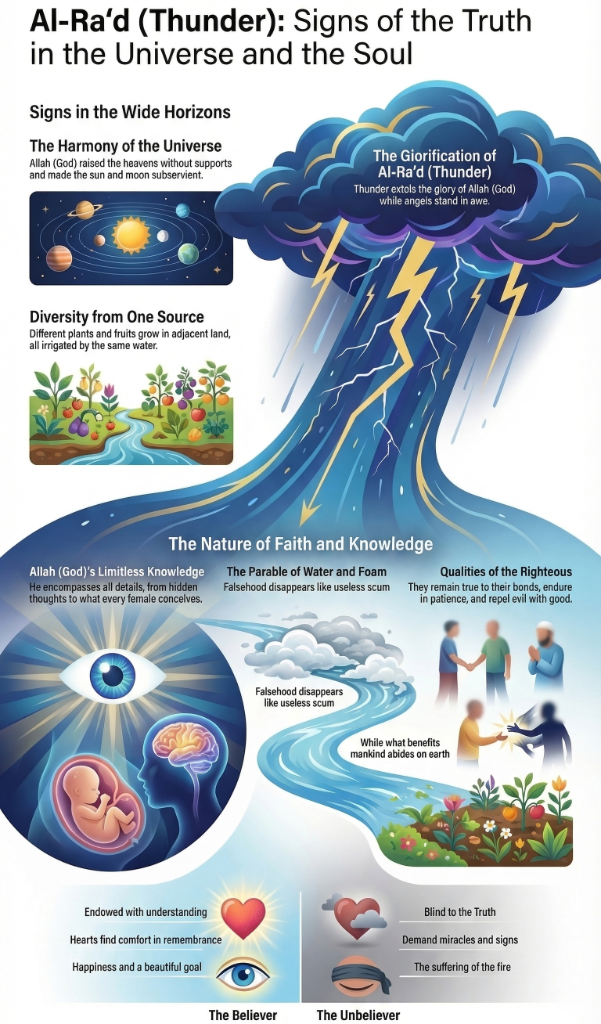
Surah Al-Ra'd is a powerful Makkan revelation that serves as a grand tour of the universe, using its spectacular phenomena to prove the Oneness and sovereignty of Allah (God). The surah maintains a hammering rhythm that pursues the human heart, contrasting the magnificent physical world (the heavens raised without support, mountains, and the cycle of night and day) with the inner world of human perception.
Abraham
52 verses
إبراهيم
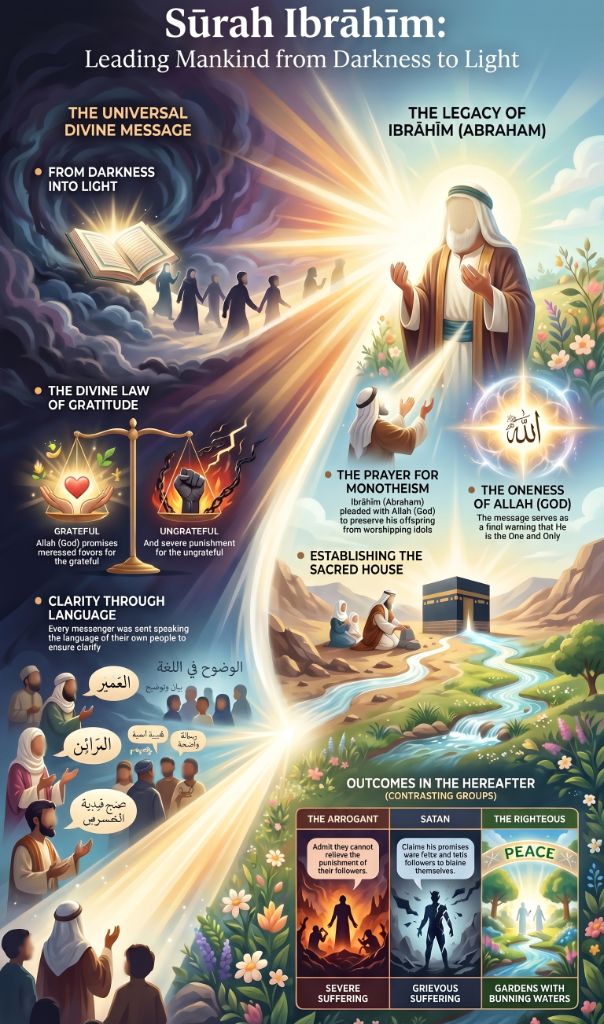
Surah Ibrāhīm is a Makkan revelation that centers on the essential mission of all Messengers: to bring mankind out of the depths of darkness into the ultimate light of faith. Named after the Prophet Ibrāhīm [Abraham], the father of many Prophets, the surah emphasizes the unity of the divine message—from Nūĥ [Noah] and Mūsā [Moses] to Muĥammad—all of whom called people to worship Allah (God) alone.
The Rocky Tract
99 verses
الحجر
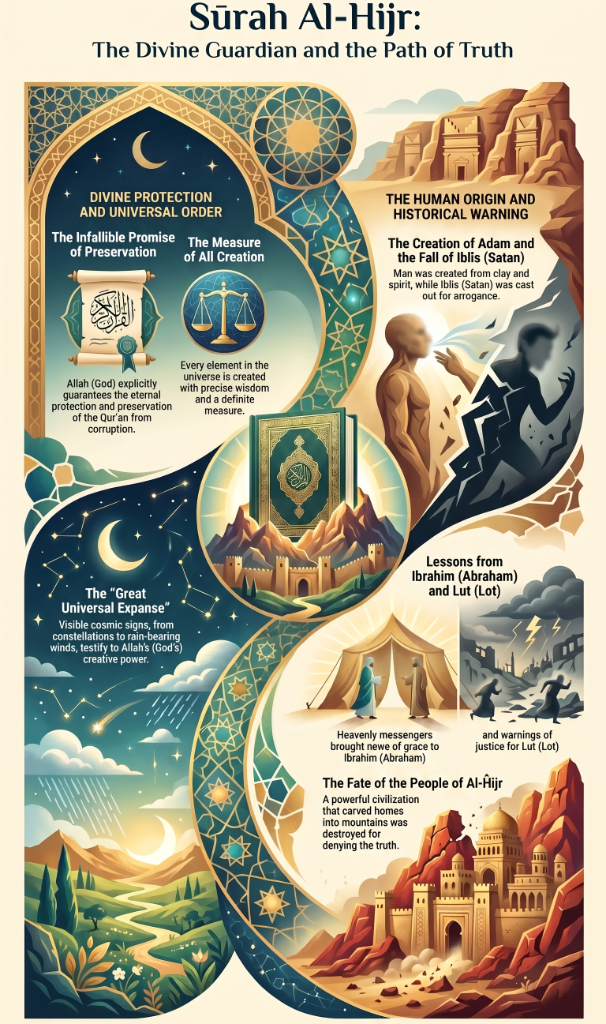
Surah Al-Ĥijr was revealed in Makkah during a very difficult time for Prophet Muĥammad [Muhammad] and the early Muslim community. It was a period when the Quraysh tribe's resistance and persecution were at their highest point. The surah serves to comfort the Prophet Muĥammad [Muhammad] by explaining that the stubbornness of the unbelievers is a common pattern in history; they reject the truth not because they lack evidence, but because their hearts have become hardened.